≽ Analysis on Johann Sebastian Bach
The Baroque composer, Johann Sebastian Bach, will be the subject of this blog's musical analysis.
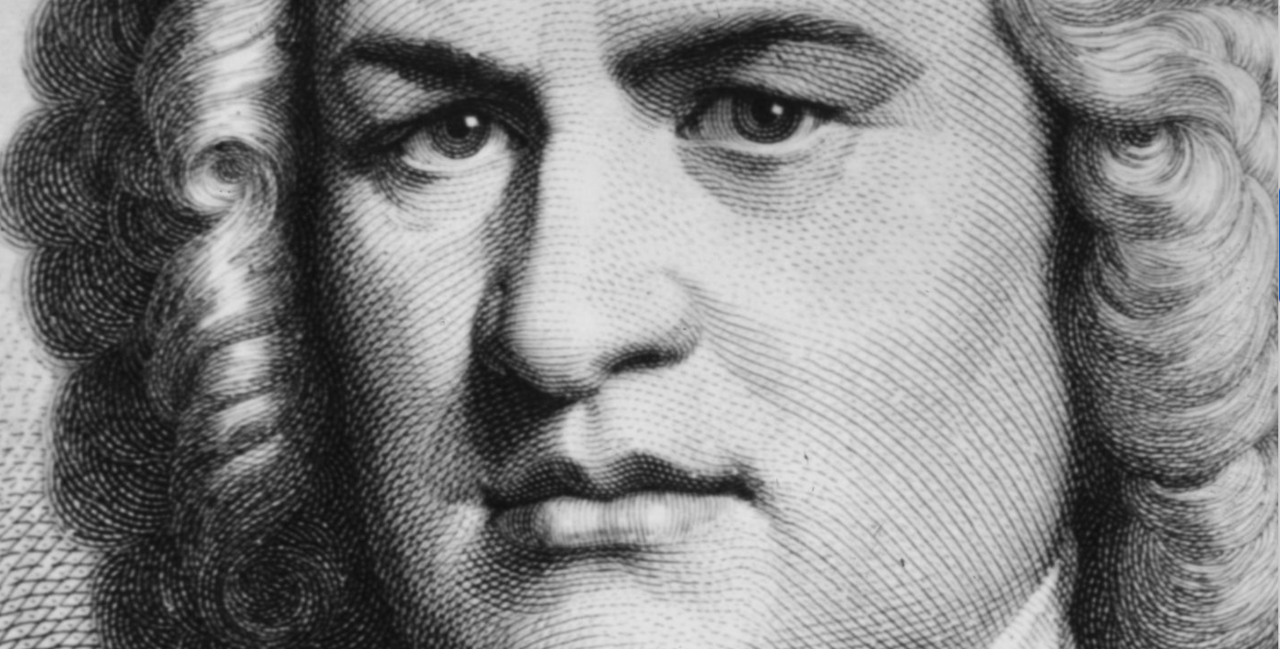
≽ Details on Bach
Johann Sebastian Bach is one of the most notable composers for not only the Baroque period, but for all forms of Classical Music as we know it today. Born into a musical family, Bach immediately began various forms of musical education. From learning the violin and harpsichord from his father, to learning the organ by his already-established uncle Johann Christoph Bach.
After his father's death in 1695, Bach studied in Ohrdruf until finding his first position as a sole organist in Arnstadt. From this point onward, the development of Bach's music and composition began to flourish into what would be defining installments in music's immense history.
The piece chosen for this analysis however, is presumed to be written sometime before 1708.
After his father's death in 1695, Bach studied in Ohrdruf until finding his first position as a sole organist in Arnstadt. From this point onward, the development of Bach's music and composition began to flourish into what would be defining installments in music's immense history.
The piece chosen for this analysis however, is presumed to be written sometime before 1708.
≽ Toccata and Fugue in D Minor
The piece chosen for this blog, perhaps one of the organ's most famous pieces, is Bach's Toccata and Fugue in D Minor.
≽ Analysis of the Piece
Sitting down for my first time in front of a piano at the age of seven was a moment I'll never forget. The enormity of the Grand extending past sight as my fingers lay one the keys too wide for my hand to fit, let alone comfortably enough to learn to play such a mysterious force. Then, as the first piece of music you hear come from the instructor's hands through the brass pipes of the church's organ strikes you with such an authoritative force that you can only be left in awe of the power, emotion, and atmosphere that music can create; and now you know you can have this power too.
The piece I am referring to in my situation is this piece here, Toccata and Fugue in D Minor. The overarching structure of the piece is what would be considered the Toccata, but the piece is actually divided into three defining sections as a whole. These are:
The piece I am referring to in my situation is this piece here, Toccata and Fugue in D Minor. The overarching structure of the piece is what would be considered the Toccata, but the piece is actually divided into three defining sections as a whole. These are:
Toccata, Fugue, then finally the Coda
Although the piece has been adapted numerous times to allow access to other instruments, this piece was for all intentions and purposes written for the organ. The organ is, in my opinion, the perfect choice of instrument that this piece could have been written for. The pipe organ is widely considered to be the grandest in not only size and complexity of any musical instrument, but in ability to convey nearly limitless range in tonal quality and pitch.
This piece opens with the immediately recognizable flourish so often associated with horror in modern society, all of which opens us to the Free-Opening Toccata. This toccata then swiftly flows through three movements all consisting of a diminished-tonal spiral, which then progresses it self into its major counterpart. This to me seems almost as a form of "emotional reset" by Bach. Forcing the listener to hear the downward spiral of the diminished seventh chord instantly creates a sense of anxiety, near desperation for ease. This is need is then met with the resolving major chord, which allows the listener to calm once more.
But on the final movement of the Toccata, Bach does not resort back to the D major chord, but falls the piece now into the main key of D Minor through a flourish. From this point onward, the piece progresses into what is considered one of, if not the most, famous compositions of fugue in any piece of music.
Bach uses his mastery of fugue to instill within this piece the ability to convey numerous emotions, musical responses, and variations all relating from the same subject matter. At the beginning of the fugue, we are introduced with the key subject matter to be considered. An immediate onslaught of 16th notes showing an upper melody backed by a lower monotone counterpart.
Bach then begins playing this same variation in different tempos and with a different sense of force as if to prime the listener for any further development upon the subject. Nearly immediately after this introduction, the key subject is flipped, resulting in the lower being melody while the higher tones now play as the submissive force in the composition. After playing the same variations from the initial movement in this now tonally-reversed format, we can begin to hear just how powerful the fugue is as a musical element.
The Coda then follows immediately from a sustained B-flat major chord at he end of the fugue. This chord is a great way to end the fugue as it once again allows the listener to rest, at least tonally, before being shifted once again. The Coda then incorporates the original key offered in the Toccata and the main subject of the fugue into a melodic cadence that slowly eases into extended, yet powerful minor chords resulting in the end of the piece.
Bach displays through this piece how a simple or noticeable melody can be shifted, twisted, and malformed into seemingly utter chaos; only for its most grating features to become its most beautiful.
≽ Overall Experience and Recommendation
Upon first listening to this piece through an organ at the age of seven, and now through headphones at the age of 23, the effect and power this piece has upon me is still absolutely overwhelming. To me, this piece exemplifies the hold that music has over human emotion and thought.
I urge anyone, especially if one has the ability to hear this piece come from a true pipe organ, to listen to this piece and give into it entirely. Listening for each section of its structure, then attempting to chain the individual components of the fugue and where they vary from the original subject is entertaining in-and-of itself. All in all, yes, I highly recommend the piece Toccata and Fugue in d Minor.
I urge anyone, especially if one has the ability to hear this piece come from a true pipe organ, to listen to this piece and give into it entirely. Listening for each section of its structure, then attempting to chain the individual components of the fugue and where they vary from the original subject is entertaining in-and-of itself. All in all, yes, I highly recommend the piece Toccata and Fugue in d Minor.
Comments
Post a Comment